
Macquarie is backing an open-architecture model for financial advice firms, committing $3 million through Macquarie Solutions to connect its own platform, investment and lending capabilities into Padua’s adviser technology ecosystem.
Macquarie becomes one of the first major diversified institutions to open several of its product engines into an adviser workflow layer it does not own, while Padua remains able to connect other platforms, brokers, insurers, super funds and service providers.
For advisers using Padua, the benefit is a shorter downstream path when Macquarie is selected. Approved advice can move through Padua.IO into Macquarie account opening, instructions, status events and reconciliation with less re-keying and fewer manual hand-offs. If another institution is right for the client, the same Padua workflow can support a different destination as that provider connects.

“The future of advice lies in open, connected infrastructure that supports advisers, protects clients and gives institutions greater confidence through better data, better evidence and better oversight. By connecting early, Macquarie can make our platforms and solutions easier to use while preserving adviser choice.”
Megan Aubrey, Macquarie Solutions — illustrative future-state quote
The move gives Macquarie a potentially valuable position inside a network of independent advice firms without requiring it to control the adviser desktop. Macquarie gains competitive advantage by being easier to connect, easier to implement and easier to evidence when its products and services are appropriate. Padua continues to operate as the connective tissue across the wider market.
Padua’s proposition begins well before implementation. Its Portal supports digital discovery and client engagement; Padua WealthX uses Consumer Data Right open banking to capture income, expenses, property values and mortgages; and Wealth Review creates a whole-of-wealth view across personal, platform and off-platform information. Advice Guidance and Advice Optimiser capabilities then support rapid advice production using nearly 900 financial planning strategies and defined turnaround-time commitments, before Padua.IO and its audit layers carry the approved outcome towards execution.
The scale is already material. Padua says its ecosystem has produced more than 200,000 advice documents and supports more than 1,100 advisers across over 100 licensees. Macquarie’s connection would place its capabilities closer to those flows, but would not reserve them for Macquarie.
Padua says its integrated model can help an adviser move from servicing around 100 clients to as many as 300 by compressing discovery, advice production, quality assurance and implementation into one connected workflow. The aim is not simply to make the same work faster, but to increase adviser capacity while maintaining advice quality, client consent and product choice.
The investment is designed to work across Macquarie. Wrap gains a cleaner route from recommendation to account opening, rollover and investment. Macquarie Asset Management gains a governed presence where advisers research and implement suitable solutions. Lending gains consented signals when a review identifies refinancing, a property purchase or a fixed-rate expiry. Macquarie’s representatives and adviser-support teams gain better visibility into where client journeys are progressing or stalling.
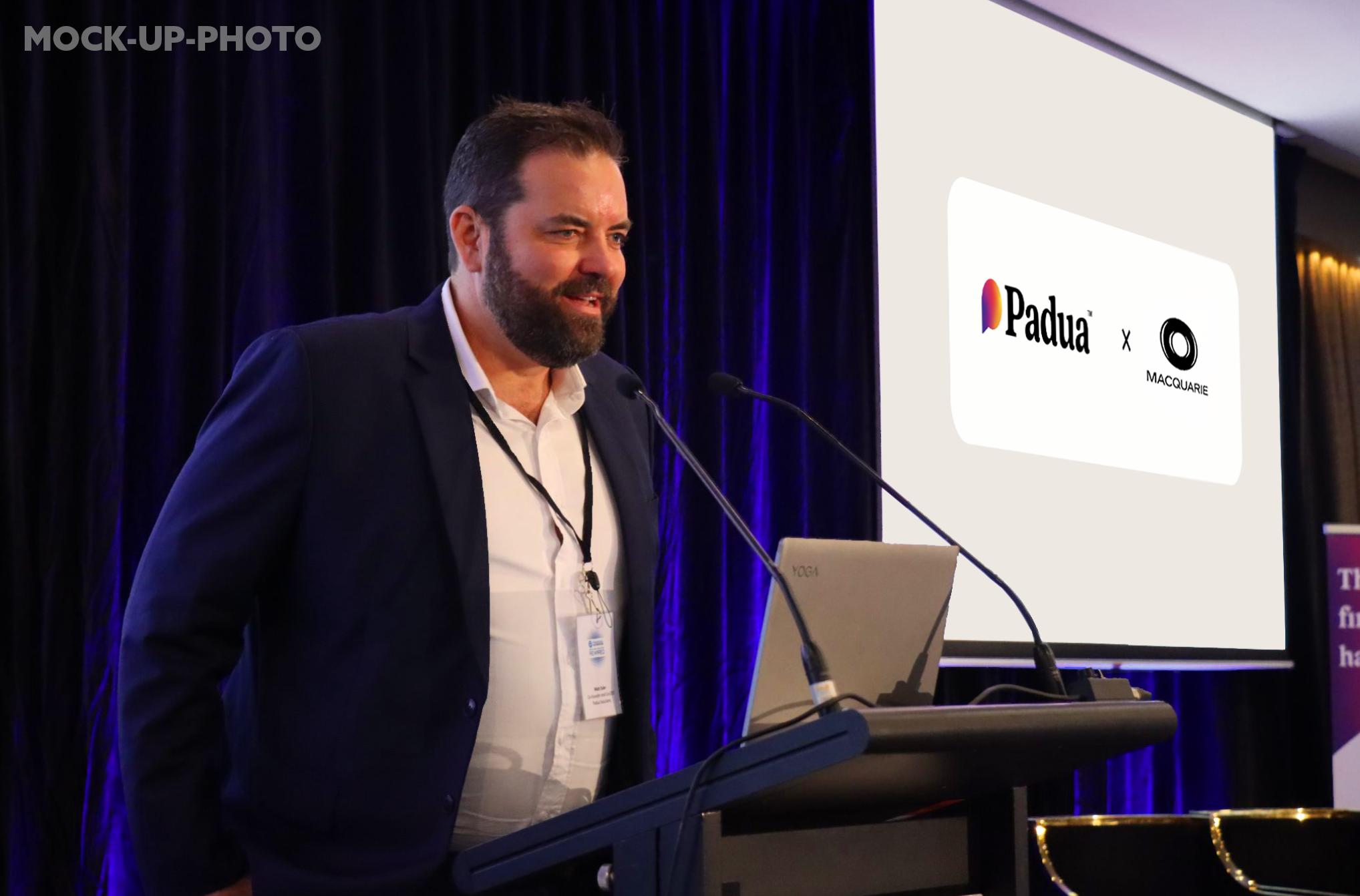
“Interoperability is the point. Padua isn’t a Macquarie front end. It is the connective tissue between the adviser, the client and whichever provider fits. Macquarie’s decision creates a faster, cleaner path when advisers choose Macquarie, while the ecosystem remains open to other providers.”
Matt Esler, Padua CEO & Managing Director
Padua has already demonstrated the interoperable model through its recent AUSIEX integration announcement, which brings execution, clearing and settlement capability inside the adviser workflow. Macquarie would broaden the model across platform, asset management and lending, giving advisers on Macquarie platforms access to Padua’s connected discovery, advice and implementation experience.
The commercial tension is obvious: institutions investing in adviser technology want growth, while advisers and licensees must preserve independence. The proposed structure seeks to separate those interests. Macquarie would fund connection, adoption and measured implementation outcomes rather than product placement. Adviser judgement, client consent, licensee policy and best-interests obligations remain the control points — systematically evidenced along the advice journey.
Padua.IO is intended to make that control visible. It converts approved advice into a sequenced, AI-enhanced implementation plan, obtains client and adviser authority at material gates, monitors destination events, manages exceptions and reconciles what was executed against what was advised. The associated evidence ledger and Regulatory Advice File Audit create a record for the client, adviser, licensee and participating institution.
For Macquarie, the timing fits the digital-first operating thesis associated with incoming chief executive Greg Ward. At June 2026, the group reported a $191.5 billion home-loan portfolio, $163.3 billion in funds on platform and $748 billion in assets under management. The $3 million commitment is modest beside those businesses, but it could make them easier for advisers to reach through one interoperable workflow.
The implementation funding would be released by Macquarie through three $1 million gates covering mobilisation and governance, adviser activation and data flows, and a live end-to-end implementation journey. That staging gives Macquarie Solutions a disciplined investment structure while requiring both parties to prove that interoperability works in practice.
Macquarie’s advantage will not come from locking advisers into a proprietary stack. It will come from being one of the first institutions to make its capabilities work cleanly inside an open adviser ecosystem. For Padua, that is the interoperability thesis made tangible: multiple institutions can connect, but the earliest and best integrations should be the easiest for advisers to use and should spur significantly improved advice production and implementation efficiency.
“Padua’s reason for being is to empower advisers to build stronger futures for more Australians. We are thrilled to be working with Macquarie to further what we believe is an exciting and noble purpose — one both organisations can drive forward together.”
Matt Esler, Padua CEO & Managing Director